
Peter Drucker created the concept “innervation” as the complement or alternative to innovation. Innervation is about influencing how your prospective buyers see your brand and the product or service you offer, ie what’s normally called effective marketing.
If we can use innervation to increase the perceived value of a product or service, we should be able to charge a premium price. Since we have not changed the technical specification or replaced components, the only cost we have is the investment in marketing. The effort it takes is creativity and understanding of what drives the customer, ie the cost and revenue analysis for such an investment are normally very positive.
Why is it not used more? The challenge for many companies is to see the value of things from the customers perspective. What customers value is not always what we think is important.
One of our customers, Rapid Granulators, offered a wide range of plastic granulators – all in the same green colour. An interesting top-of-the-line model was a re-enforced series of granulators for extra tough applications which nearly no-one bought. We asked how you could see that it was the tougher model and the answer was “on the spec plate”.
Our recommendation was extremely simple: Paint the re-enforced models in a stainless steel colour, add a big sticker saying “PowerTech” and increase the price with X%. Suddenly the PowerTech model was dominating sales and became very profitable.
Another fantastic case, that won a Grand Prix at the Cannes Festival last year, is Indian Railways – the busiest public transport system in the world with 24 million travellers per day. The sheer amount of travellers poses an administrative challenge since there is simply no time to check that all have tickets. The result: 41% of travellers never paid for a ticket – a revenue loss of 820 million USD per year.
How do you solve this challenge. In Sweden, the stiff railway or bus companies normally employes more people to check that everyone has a ticket, and thereby “scaring” users to pay for a ticket. In India, the authorities were somewhat more creative and understood what drives their customers.
Beside commuting a lot with train, Indians love their lotteries. Indians are spending 33 billion USD per year with the hope of winning a fortune. The simple and extremely smart solution to make more people buy train tickets was to create a new lottery called Lucky Yatra, where every train ticket bought also became a lottery ticket with daily prizes. The winners were announced on screens at the station.
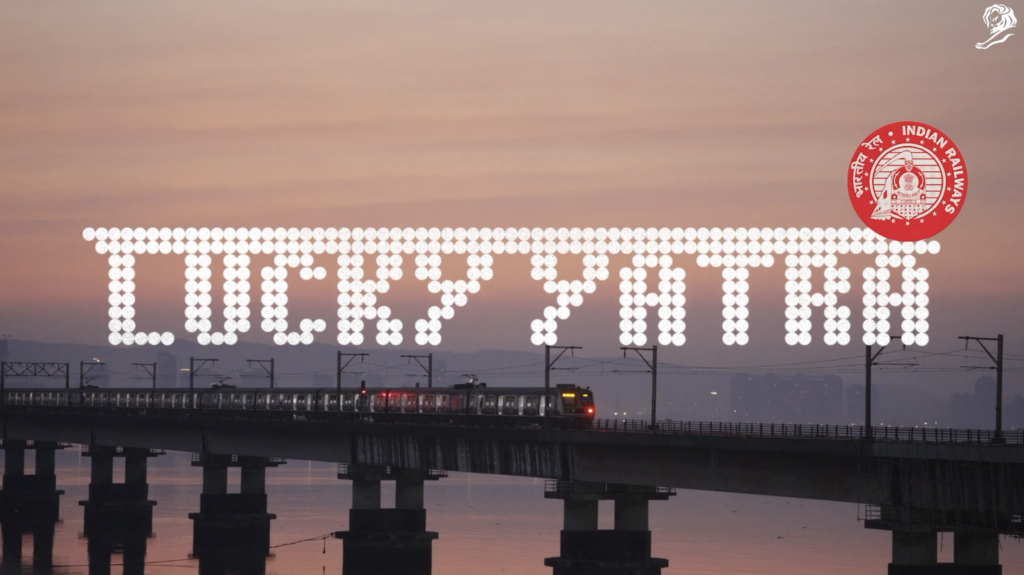
The new ticket made the Indian rail travellers go crazy, and Lucky Yatra quickly became a big success. Suddenly travellers were fighting to buy a ticket for their travel (and be a part of the lottery).
The result: For an investment of 1.4 million USD in prizes, revenues from ticket sales rose by 685 million USD.
If you want to discuss communication, you are always welcome to contact ulf@sfinxagency.se