
Extremeness Aversion, also known as the Compromise Effect, describes our tendency to avoid options that feel too extreme — either too cheap or too expensive. In uncertain situations, people often perceive the lowest-priced option as poor quality. Conversely, the highest-priced option can feel excessive or showy. As a result, many gravitate toward the middle option, which feels like a sensible compromise balancing quality and cost.
In a study at a McDonald’s outlet run by Sharpe, Staelin, and Huber (2008), people were asked to choose between a range of different drink size options. Regardless of the size options offered, 80% chose the medium size.
Marmite applied Extremeness Aversion brilliantly to boost sales of their standard £3.25 Marmite jar by introducing a new brand called Marmite Truffle, priced at £4.50. They quickly found that consumers who were previously picking a cheaper alternative were switching back to the standard Marmite again. The cheaper alternative felt like a compromise on quality and the truffle version seemed too extravagant — so the standard Marmite became the attractive option again.
WHAT’S GOING ON HERE?
People habitually pick the middle option because it often feels like a balanced and reasonable choice, especially when faced with uncertainty or when choices are framed in a way that highlights the advantages of moderation. Many individuals also have a natural tendency to avoid extremes because they can be perceived as risky, less desirable, or less socially acceptable.
PUTTING IT TO THE B2B BUYER TEST
Most academic research on this bias has been conducted on consumers. Very little evidence exists on the impact and influence of Extremeness Aversion on business professionals, especially at a global level.
To change that, the survey company questioned 500 B2B decision makers working in enterprise organisations across the world. Participants were split into three groups and shown a webpage containing different software subscription pricing packages from a fictional cyber brand called EnCryptify.
Group 1 saw two pricing options – the ‘Essential Package’ for £15/month and the ‘Pro Package’ for £25/month.
Group 2 saw three pricing options: the ‘Essential’ and ‘Pro’ packages, and the ‘Enterprise Package’ for £42/month.
Group 3 saw all three pricing options, but this time the ‘Enterprise Package’ was priced at a much higher £100/ month.
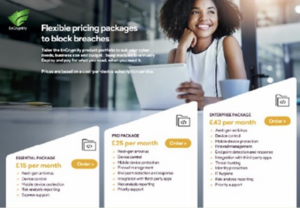
When presented with two pricing options, 72% of buyers in Group 1 found the cheaper ‘Essential Package’ more appealing, but when presented with three pricing options, the majority (59%) found the ‘Pro Package’ more appealing. Interestingly, 64% of the participants who saw the higher priced ‘Enterprise Package’ for £100/month instead of £42 opted for the middle-priced option. This is a 5% difference when presenting a higher-priced option as the 3rd alternative.
In today’s price-sensitive economic environment, Extremeness Aversion offers B2B marketers a powerful behavioural insight to guide pricing strategy, reduce decision friction and increase conversions — especially when buyers are under pressure to justify spend and minimise risk.
Buyers want to avoid overspending, but also fear underinvesting in a solution that might not deliver. The middle option becomes a psychological safe zone: not too cheap to seem ineffective, not too expensive to seem indulgent.
Extremeness Aversion can also be used in non-pricing specific way. For example, it can be used to influence decision-making across content formats, event engagements, product demos, and even sales meetings (see application examples below).
For B2B marketers, this means the middle-tier offer isn’t just a fallback – it’s a strategic anchor. By designing marketing strategies with this bias in mind, you can reduce decision friction, increase perceived value, and guide buyers toward the solution you want them to choose.
APPLYING EXTREMENESS AVERSION
Here are some ideas for applying Extremeness Aversion to marketing or pricing strategies to increase perceptions of value and drive conversion rates.
Three-tier pricing with a strategic middle
Design your pricing page with three clear tiers. Make the middle tier your ‘hero’ price, i.e., the one you want buyers to adopt the most. This will ensure the middle tier becomes the ‘safe’ and most valued choice — not too risky, not too extravagant.
Use contrast to anchor value by making the top-tier offer slightly extreme to make the middle one feel like an even smarter compromise.
Choose your perspective’ content formats
Offer three content perspectives to guide engagement and interest towards your offering: The Beginners view (e.g., “What is X and why it matters?”), the Strategic view (e.g., “How X can drive growth for your company?”), and the Futurist view e.g., (“Where X is going in 2026?”). The strategic middle option will feel relevant and actionable without being too basic or speculative.
This structure will help to position your brand as both accessible and forward-thinking, whilst nudging users towards the most valuable of the content pieces.
Product demo hooks
Give prospects more control over how they explore your product. Offer three demo formats: a self-guided tour, a live 30-minute walkthrough, and a full custom session. The live demo hits the sweet spot of effort and value — offering enough depth to engage, without demanding too much time. It’s the option most likely to convert.
Do you want to know more about how to motivate the right value for your products, just reach out to ulf@sfinxconsulting.se
| “This research shows that introducing a third, super- premium option —even if few choose it — can be a powerful pricing strategy for B2B brands. It reframes the middle option as better value, nudging more buyers toward it and ultimately increasing revenue.” | |
| RICHARD SHOTTON | |
The study and report are presented by Transmission, one of the major B2B agencies in the world, working in partnership with behavioural scientist Richard Shotton and global research agency NewtonX.